The Clinical Encounter Is a State Transition
Why healthcare documentation needs to stop recording what happened and start managing what changed.
Abstract state transition map
A Note Is Not a Memory of Care
A patient walks into your room on a Tuesday afternoon. You have fifteen minutes. They have a folder of results, a vague worry, two new medications a hospital started three weeks ago, and a story that does not quite match last month's specialist letter.
In the next fifteen minutes, something important will change.
Their diagnosis may sharpen or soften. Their risk may rise or fall. A treatment plan may be reinforced, modified, or quietly abandoned. Responsibility may transfer from one clinician to another, or remain uncertain.
Then you write a note.
And here is the uncomfortable truth at the centre of modern healthcare:
The note you write will almost certainly fail to capture the thing that actually mattered about the encounter, not what was said, but what changed.
For decades, healthcare documentation has been built around a single artefact: the clinical note.
The note matters. It remains essential for communication, continuity, medico-legal accountability, billing, and clinical reasoning. Narrative documentation is not disappearing.
But the note is not the encounter.
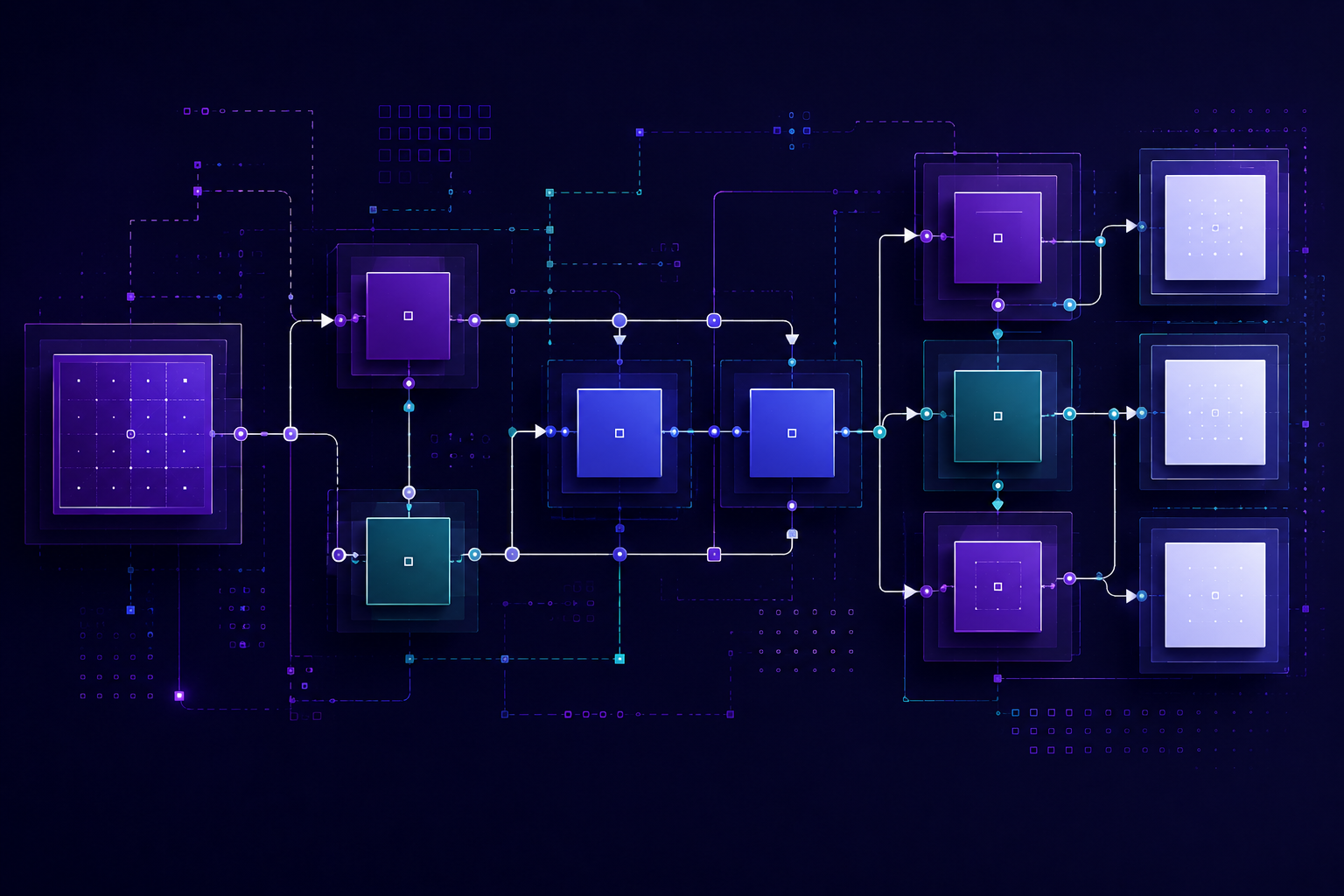
The encounter is a state transition event.
A patient enters with a prior clinical state. They leave with a new one. The real clinical work, and the real documentation challenge, lives in the delta between those two states.
The important questions are not what was said, what was typed, or what was generated.
The important questions are:
- What changed?
- What does that change mean?
- What uncertainty remains?
- What should happen next?
- Who is now responsible?
That is a fundamentally different documentation problem.
And for a long time, healthcare systems have been solving the wrong one.
Patients Do Not Live in Notes. They Live in Time.
No patient experiences their healthcare as a series of isolated records.
They experience it as trajectory.
Sometimes smooth. Often fragmented. Occasionally catastrophic.
Consider three patients familiar to almost every clinician.
A woman with type 2 diabetes moves between general practice, pathology, endocrinology, podiatry, pharmacy, and intermittent hospital admissions. Her HbA1c is not a standalone number. It only has meaning relative to the numbers that came before it.
A man with ischaemic heart disease rotates through cardiology, imaging, medication adjustments, emergency presentations, rehabilitation programs, and primary care reviews. His ejection fraction is not a value. It is a curve.
A patient with COPD cycles through baseline, exacerbation, hospitalisation, recovery, and a gradual return to a lower baseline than before. Their FEV1 only becomes meaningful when viewed longitudinally across time.
For each of these patients, the clinical truth exists primarily between encounters, not inside any individual note.
And yet most documentation systems still behave as though every encounter begins from zero. A new note opens. A blank cursor blinks. The clinician reconstructs prior context from fragmented correspondence, scrolled-through old notes, incomplete recall, disconnected systems, or, too often, not at all.
The note can preserve information.
It cannot, on its own, preserve change.
You Cannot Interpret Today Without Yesterday
Try this thought experiment. A patient's blood pressure today is 150/90.
Is that concerning?
The answer is impossible without prior state.
If their baseline is 180/110, this may represent improvement.
If their baseline is 120/75 despite triple antihypertensive therapy, this may represent deterioration.
If they were normotensive last month and now present with headache and visual disturbance, this may represent something entirely different again.
The number itself is not the meaning.
Meaning is comparison.
This principle applies to almost every element of clinical medicine.
A patient who says their pain is "worse" is describing change relative to baseline. A patient who feels "stable" is anchoring themselves to prior state. A wound photograph is not an image, it is a frame in a longitudinal sequence. A tumour measurement is not a datapoint, it is a trajectory. A gait assessment without a prior gait is often little more than an educated guess.
Prior state is not background information. It is the substrate that gives current information meaning.
And prior state is much richer than a diagnosis list. It includes baseline symptoms, functional capacity, medication tolerance, prior investigation interpretation, imaging trajectory, treatment response, unresolved questions, pending referrals, patient goals, previous decisions, documented uncertainty, safety-net advice, known risks, and prior failures of care.
When systems fail to preserve this longitudinal context, clinicians are forced into a cognitively expensive process: reconstructing context from scratch, repeatedly, under time pressure.
It is inefficient.
It is exhausting.
And at scale, it becomes unsafe.
Defining Current State Is Interpretation, Not Data Capture
During an encounter, clinicians gather evidence: history, examination, imaging, pathology, vitals, wearable data, home monitoring, patient-generated photos, medication lists, specialist correspondence, patient-reported outcomes.
But evidence is not the same as state.
State emerges when evidence is interpreted.
The clinician is constantly answering questions such as:
- Is the patient improving or deteriorating?
- Is this expected recovery or emerging complication?
- Is treatment failing, or has adherence changed?
- Is a new diagnosis emerging?
- Is this uncertainty acceptable to monitor, or dangerous to defer?
This distinction matters enormously for clinical AI.
And it is where many current systems collapse.
A conventional AI documentation system typically captures a transcript, merges prior history, and generates fluent prose.
The fluency is seductive.
The fluency is the problem.
Because fluent prose silently fuses three distinct layers that should remain separable:
- Evidence: what was observed or measured
- Interpretation: what the clinician believes the evidence means
- Action: what should now happen
When those layers collapse into a single paragraph, provenance becomes unclear, uncertainty disappears, reasoning becomes difficult to audit, responsibility becomes ambiguous, and future reinterpretation becomes harder.
A future clinician, or a future AI system, should be able to see what evidence existed, which interpretation was made, what uncertainty remained, which actions followed, and what the clinician explicitly validated.
That is the difference between generated prose and governed clinical infrastructure.
And that distinction is not stylistic.
It is a safety boundary.
State Change Is the Centre of the Encounter
Ask experienced clinicians what matters most in a consultation.
Very few will answer "the diagnosis."
More often, the real question is: what has changed?
Because change drives action. Change determines escalation, de-escalation, investigation, treatment modification, transfer of responsibility, admission, discharge, reassurance, and uncertainty monitoring. Change is what the patient came to find out about, even when they cannot articulate it that way.
A mature clinical model recognises multiple forms of state movement:
- Improved: symptoms respond to treatment
- Worsened: disease progression or treatment failure
- Stable, but stability is success: expected decline did not occur
- Stable, but stability is failure: expected improvement did not occur
- Fluctuating: variability itself becomes clinically meaningful
- Resolving: recovery is progressing appropriately
- Unresolved: the original clinical question remains open
- Newly identified: a new issue has emerged
- Newly excluded: a feared condition has been ruled out
- Transferred: responsibility has moved between teams
- Escalated or de-escalated: care intensity has changed
- Uncertain: uncertainty itself becomes an actively managed state
These are not merely documentation labels.
They are management states.
Each implies different risk, different follow-up, different ownership, different urgency, and different operational next steps.
Most documentation systems cannot represent these transitions explicitly.
Which means they cannot reliably help manage what happens after the encounter ends.
The Encounter Should Produce Action, Not Just Prose
A useful test for any documentation system, AI-powered or otherwise, is this:
After the encounter, can the patient receive a clear explanation of what changed? Can the referring clinician convey the exact clinical question, not just the history? Can the next clinician rapidly understand risk, trajectory, and uncertainty without phoning anyone? Can responsibility be clearly identified? Can unresolved questions remain visible across time? Can provenance and validation be audited years later?
A single retrospective note struggles to achieve all of this simultaneously.
Yet healthcare has repeatedly asked the note to function as legal record, care plan, referral, handoff, patient summary, communication tool, structured dataset, and operational memory, all at once, usually in free text, usually under time pressure.
It is not surprising the note frequently fails.
The surprising thing is that healthcare infrastructure still treats it as the primary operational container for clinical truth.
A Practical Example of State-Aware Infrastructure
Consider a patient with heart failure presenting with worsening breathlessness.
A conventional note may describe the symptoms, examination findings, medication list, chest X-ray, and management plan.
But a state-aware infrastructure model preserves something more important.
It preserves the patient's prior functional baseline, the recent weight trajectory, previous ejection fraction trends, medication tolerance history, renal function trajectory, prior episodes of decompensation, unresolved uncertainty regarding fluid balance, clinician interpretation of the current deterioration, transfer of follow-up responsibility, and the planned reassessment interval.
The system is not merely storing information.
It is maintaining longitudinal clinical state.
That distinction becomes critically important over months, years, multiple clinicians, and eventually machine-assisted reasoning.
How Regenemm® Approaches This
Evidence to action pathway
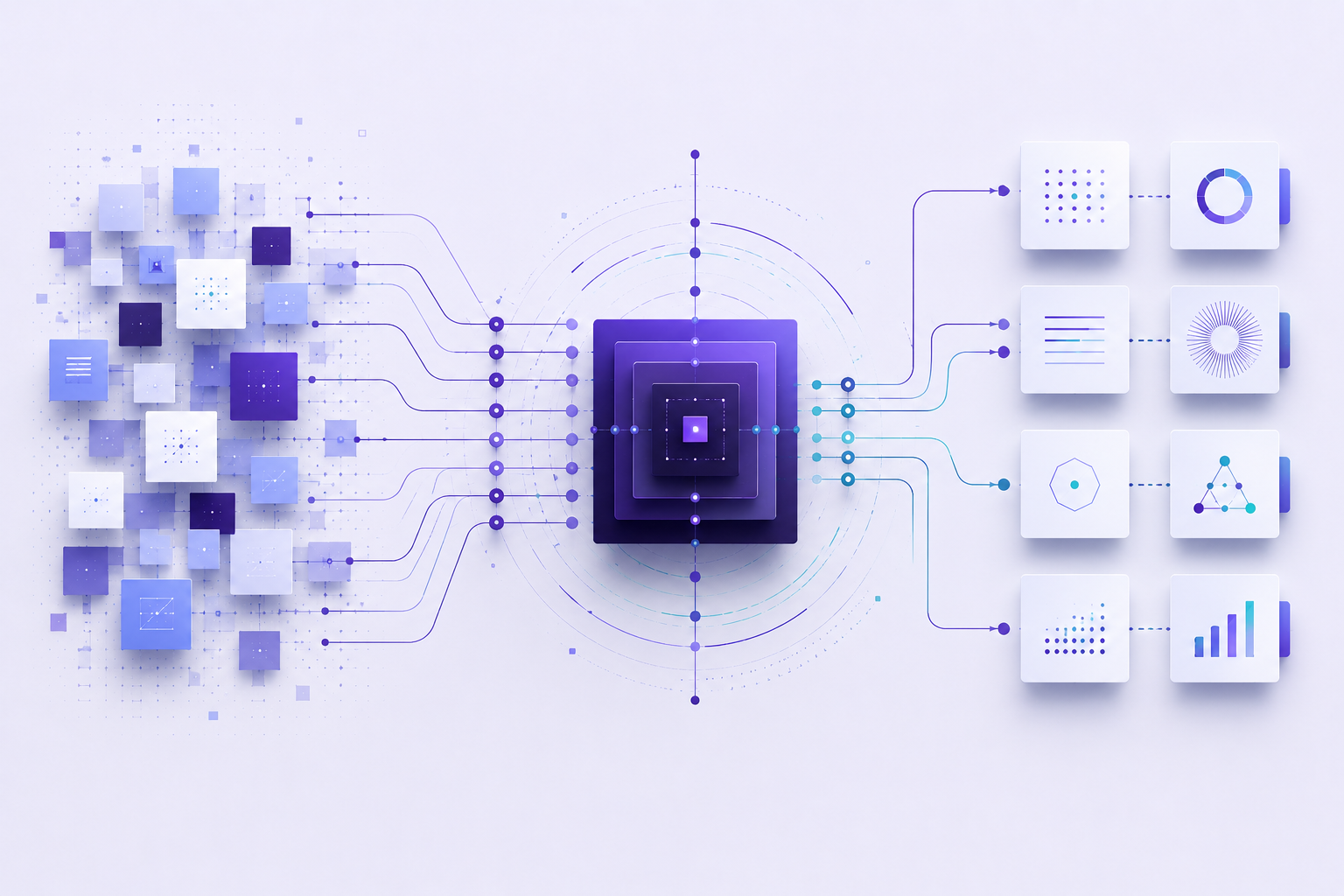
Regenemm® is built around a different sequence:
Evidence → Interpretation → State → State Change → Action → Output
Each layer remains explicit. Each layer can be inspected, validated, governed, versioned, and audited.
The Regenemm® Clinical Document Aggregator (RCDA) is not a note generator. It is a governed system for aggregating encounter evidence, preserving provenance, supporting clinician validation, maintaining uncertainty visibility, and producing clinically appropriate outputs. The note becomes one output among many, not the centre.
The Parallel Patient Context Engine (PPCE) preserves the longitudinal substrate that gives present information meaning: prior state, unresolved questions, historical trajectory, prior commitments, prior interpretations, and continuity across settings and time.
Clinical context cards then carry the smaller, state-relevant units that prose so easily dissolves: symptom changes, examination findings, investigations, imaging, photos, videos, risks, decisions, uncertainties, and transfers of responsibility. They are the structured atoms of governed clinical meaning.
Together, these components allow documentation to evolve from static record-keeping into longitudinal clinical infrastructure.
The note still matters.
It is simply no longer the centre of gravity.
The patient is.
What This Is Really Arguing For
The future of healthcare documentation is not merely faster note generation.
Faster notes solve a typing problem.
Healthcare has a reasoning problem.
Clinical care has always revolved around recognising state, interpreting state, monitoring change, managing uncertainty, and acting on transition. Documentation systems that fail to support that work inevitably increase cognitive load and fragment continuity.
So the important questions for any healthcare AI platform, EHR module, or documentation system become:
- What was the prior state?
- What is the current state?
- What changed?
- What evidence supports the change?
- What uncertainty remains?
- What action follows?
- Who is responsible?
If a system cannot answer those questions clearly, it is not clinical infrastructure.
It is transcription wearing a stethoscope.
The clinical encounter is a state transition.
It is time healthcare infrastructure started treating it that way.